



Let’s be blunt: premium collection isn’t just a back-office finance task anymore. It’s the financial spine of your entire business. It dictates whether your policyholders stay or walk. Yet, whether you run complex life policies or high-volume personal lines, many teams are still fighting legacy billing systems that simply can’t keep up with modern, flexible insurance products.
Here is the real problem. As you launch more dynamic coverage to meet customer demands, operational complexity explodes. Juggling a messy web of fragmented renewal cycles and mid-term adjustments by hand is a losing game. These bottlenecks ripple fast. They cause administrative friction for reconciliation teams, choke your cash flow and trigger accidental policy lapses.
For insurers and brokers trying to scale, upgrading your billing platform isn’t about chasing a shiny new piece of tech. It is a calculated strategic move to protect your margins and stop customer churn before it starts.
The hidden complexity behind premium collection
Premium collection may seem straightforward on the surface, but for many insurance providers, it quickly becomes one of the most operationally demanding parts of the policy lifecycle.
On paper, premium collection looks simple. You invoice a client, they pay and the policy stays active. But step into any back office and the reality becomes obvious: it is one of the most operationally demanding parts of the policy lifecycle.
The pressure starts when you scale. Every policy comes with different billing frequencies, renewal schedules, and payment preferences. Managing those moving parts manually quickly becomes unsustainable.
When processes rely on disconnected systems, small cracks widen fast. A missed renewal reminder can create an unintended coverage lapse. A failed payment triggers additional admin work. Add mid-policy changes or endorsement adjustments, and finance teams end up manually matching transactions across multiple systems and spreadsheets.
On their own, these issues may seem manageable. But multiplied across thousands of policies each week, they create operational friction that impacts visibility, cash flow, and ultimately the customer experience.
Most insurers don’t realise how much time and effort is spent holding these processes together until they begin evaluating modern alternatives. By then, teams are often dealing with fragmented systems and manual workflows deeply embedded into day-to-day operations.
The challenge is no longer simply collecting premiums. It is managing the entire payment lifecycle in a way that remains efficient, scalable, and reliable as the business grows. That’s why more insurers are rethinking the infrastructure behind their billing and premium collection operations.
What should insurance providers look for in a premium collection platform?
Most generic billing and payment platforms are completely blind to the messy realities of the insurance industry. Moving money from a bank account is the easy part. Insurers need an engine built to handle the chaotic stuff—the constant renewals, mid-policy endorsements, recurring billing cycles, real-time reporting, automated payment recovery and continuous customer touchpoints across the entire policy lifecycle.
When evaluating a premium collection and billing platform, these are some of the most important capabilities to consider.
Flexible billing that supports different policy types
Not every policy follows the same billing model.
One customer wants a strict monthly pull. Another demands quarterly or annual invoices to match their corporate cash flow. Commercial lines, group benefits, and niche, specialized products require wildly different, bespoke billing logic. Forcing every single policyholder into a rigid, one-size-fits-all billing structure is a recipe for operational disaster.
A modern platform must let you configure distinct payment tracks based on the specific policy, not the system’s limitations. When you have the power to customize billing frequencies on the fly, you create a seamless client experience. More importantly, you instantly kill the mountain of manual admin work your teams waste dealing with exceptions.
Make sure the platform delivers:
- Monthly, quarterly, and annual billing options
- Policy-specific billing rules
- Flexible payment schedules
- Support for individual, business and group policies
Automated renewals and reminders that reduce policy lapses
Renewals are one of the most important moments in the policy lifecycle. Yet, when you leave renewal notices, payment prompts and critical follow-ups to manual back-office tasks, you are actively flirting with disaster. The risk of missed payments and accidental, high-liability policy lapses skyrockets.
A sophisticated premium collection engine takes this entire burden off your plate. It completely automates these touchpoints so clients get clear, timely alerts throughout the renewal window, without your internal staff lifting a single finger.
This does not just clean up your back-office efficiency. It shields your policyholders from sudden coverage gaps and keeps your recurring revenue secure.
Make sure the platform delivers:
- Hands-free alerts: Fully automated renewal notices triggered at critical milestones.
- Proactive friction removal: Smart payment reminders sent before deadlines hit.
- Continuous billing continuity: Seamless, automatic recurring premium collection.
- Tailored operations: Highly configurable renewal workflows that match your brand’s specific timeline.
Grace periods and smart retries that protect retention
Failed payments are inevitable. Lost cards, expired payment methods and temporary account issues happen every day.
The real differentiator isn’t that payments fail—it is how your system reacts when they do. Without automated safeguards in place, a basic bank rejection can quietly snowball into a cancelled policy. That means furious clients and an avalanche of cleanup work for your support teams.
Modern payment engines tackle this head-on with intelligent recovery workflows, automated retries and strategic grace periods. They quietly chase down and fix failed transactions before they ever touch or compromise the client’s actual coverage. For insurers, this isn’t just a minor operational feature; it is an essential line of defense to stop avoidable customer churn and protect your bottom line.
Make sure the platform delivers:
- Intelligent retry logic: Automated payment retries that strike at optimal times.
- Custom safety nets: Configurable grace periods that align with your compliance rules.
- Active revenue rescue: Smart, automated workflows designed to salvage failed payments.
- Retention shields: Dedicated policy lapse prevention tools that flag accounts at risk.
Support for policy changes, upgrades, and mid-cycle adjustments
Insurance policies rarely remain static throughout their lifecycle.
Customers upgrade cover, add new services, make changes to existing policies or adjust coverage levels as their circumstances evolve.
Handling these adjustments manually can quickly become complex, particularly when billing changes need to be calculated mid-cycle.
A modern billing platform should be able to automatically manage prorated charges, upgrades, downgrades and one-off adjustments without creating additional reconciliation work for your team.
Real-time visibility across payments and policy performance
Transaction processing is only half the battle; the real asset is clarity.
When you lack a clear window into cash flow, upcoming renewals and payment failures, your teams fly blind. They spend hours hunting down information across siloed systems just to make basic daily decisions.
Upgrading to a modern platform gives you a single, unified view of all payment activity. This transparency breaks down internal data silos, handing your finance, operations and customer service teams the exact data they need instantly.
Look for a payment platform that has the following features:
- Real-time reporting
- Payment status tracking
- Renewal visibility
- Reconciliation reporting
- Centralised dashboards
Advanced fraud protection and risk controls
Handling massive volumes of recurring revenue leaves no room for security errors. It is a baseline operational requirement. The right platform must intercept suspicious activity before it hits your bottom line using built-in fraud detection, live transaction monitoring and strict risk controls.
Beyond shielding your cash flow, ironclad fraud management is your primary defense for maintaining market trust and staying tightly aligned with regulatory mandates.
Essential security benchmarks include:
- Live, automated fraud monitoring to flag anomalies instantly.
- Real-time transaction screening acting as your digital gatekeeper.
- Custom risk guardrails tailored directly to your specific compliance rules.
- Fortified, audit-ready data infrastructure that exceeds standard industry benchmarks.
Fast support when it matters most
A slight delay in resolving a billing glitch can quickly spiral into a costly customer service nightmare. When technical failures or broken renewal links happen, you cannot afford to wait 48 hours for a generic helpdesk ticket reply.
Excellent billing technology is useless without rapid, expert human support standing right behind it. Responsive assistance minimizes daily business disruption, patches operational leaks, and protects your brand reputation when workflows break down. You need direct access to dedicated support teams who actually understand your specific region’s insurance market, alongside local expertise and ongoing operational assistance to help you scale smoothly.
A smarter approach to premium collection and policy billing
Upgrading your premium collection engine is far more than a routine IT procurement decision. It is a foundational choice that directly dictates how fast, fluidly and reliably your entire operation can scale across the policy lifecycle.
MuliPay replaces the traditional friction of insurance billing with a unified, high-velocity system. By consolidating flexible workflows, automated renewals, intelligent payment recovery and real-time reporting under one compliant architecture, MuliPay eliminates the operational blind spots that slow businesses down.
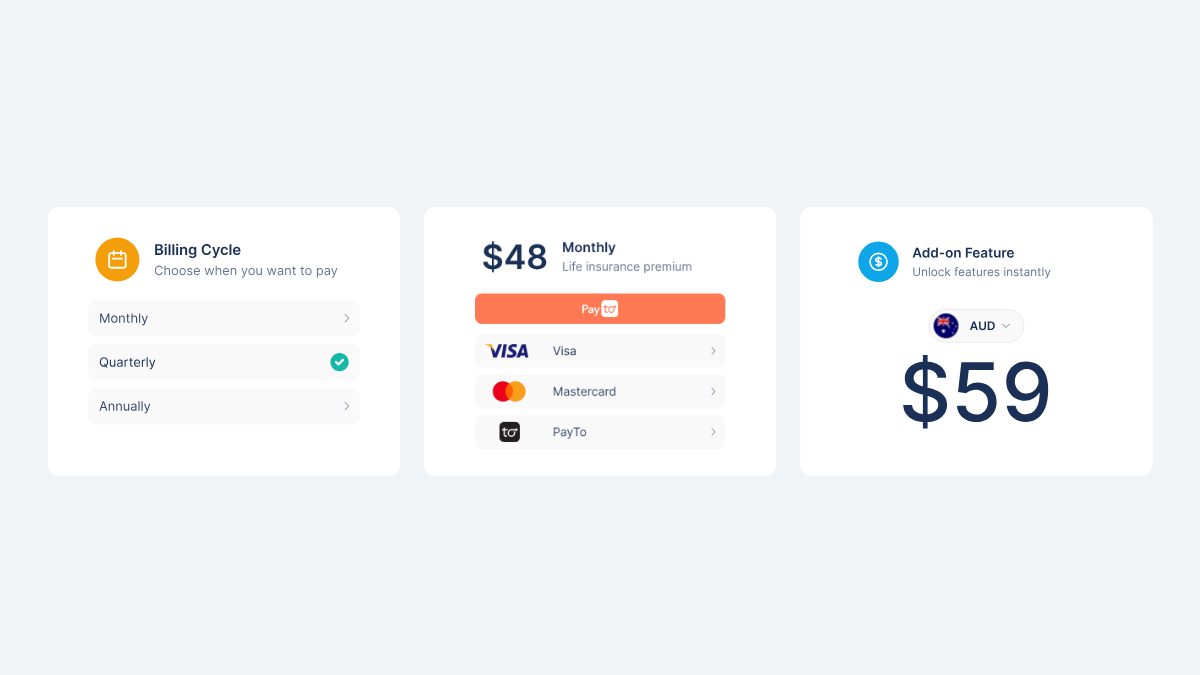
The platform adapts seamlessly to your specific distribution model—whether you are dealing with high-volume personal lines, complex corporate commercial risks, affinity partnerships or bespoke niche products. We built MuliPay to strip away the heavy administrative overhead that burns out teams. When your payment architecture runs flawlessly in the background, your people can finally stop fighting legacy system limitations and focus entirely on protecting policyholders and expanding your book of business.
Whether you operate a single early learning centre or manage multiple locations, MuliPay helps simplify the operational side of recurring payments so your team can spend less time on administration and more time focused on delivering quality care.
Ready to modernise your childcare payment workflows? Explore MuliPay and discover a more efficient way to manage recurring fee payments.